
Baby or Child Fussy After the Holidays? Why It Happens and How to Help

If your baby or young child has suddenly become fussier, clingier, harder to settle, or more emotional after the holidays, welcome to parenthood. This is one of the most common concerns parents bring up in the week or two after Christmas.
At Mums & Bums Clinic, after the Christmas break, I often hear things like:
“They were sleeping fine before the holidays.”
“She cries as soon as I put her down.”
“He just seems unsettled all day.”
For most babies and children, this behaviour change is temporary, and linked to routine disruption and overstimulation rather than illness or pain.
Is It Normal for Babies and Children to Be Fussy After Holidays?
Yes, it really is.
Babies and young children depend on predictability to feel calm and regulated because their brains and nervous systems are still developing. The parts of the brain that support emotional control, stress regulation, and adaptation to change are immature in early childhood, so they rely heavily on external structures to feel safe.
During busy periods like the holidays, there is often a sudden increase in stimulation, noise, activity, and social interaction, combined with disrupted sleep and feeding routines, and the fact that they are not attending school. For a developing nervous system, this creates a state of overload. Even positive experiences can be tiring when they happen in large doses.
After the excitement settles, many babies and children show signs that their system is struggling to recalibrate.
This response is not behavioural. It is the body’s way of signalling that it needs rest, predictability, and a return to familiar patterns. It usually doesn’t mean something is wrong, but rather that their nervous system is working to regain its balance.
Why Holidays Disrupt Baby and Child Routines
Holiday periods tend to stretch routines in ways that add up quickly. Common changes include:
Later bedtimes and irregular wake-ups
Missed or shortened naps
Feeding times shifting
More noise and stimulation
Different caregivers and environments
Babies and children don’t understand that these changes are temporary. Their bodies respond by becoming overtired or overstimulated, often resulting in fussiness.
Signs of Overstimulation in Babies and Children After the Holidays
Overstimulation is one of the biggest contributors to post-holiday fussiness, especially in babies and young children whose nervous systems are still learning how to filter and process sensory input.
During busy periods like the holidays, children are exposed to more noise, movement, lights, faces, and environmental changes than usual. A developing brain cannot yet filter out excess stimulation, so all of this input is processed simultaneously. This places the nervous system into a heightened state of alert.
When the brain remains in this alert state for too long, stress hormones increase, and it becomes harder for the body to switch into a calm, settled mode.
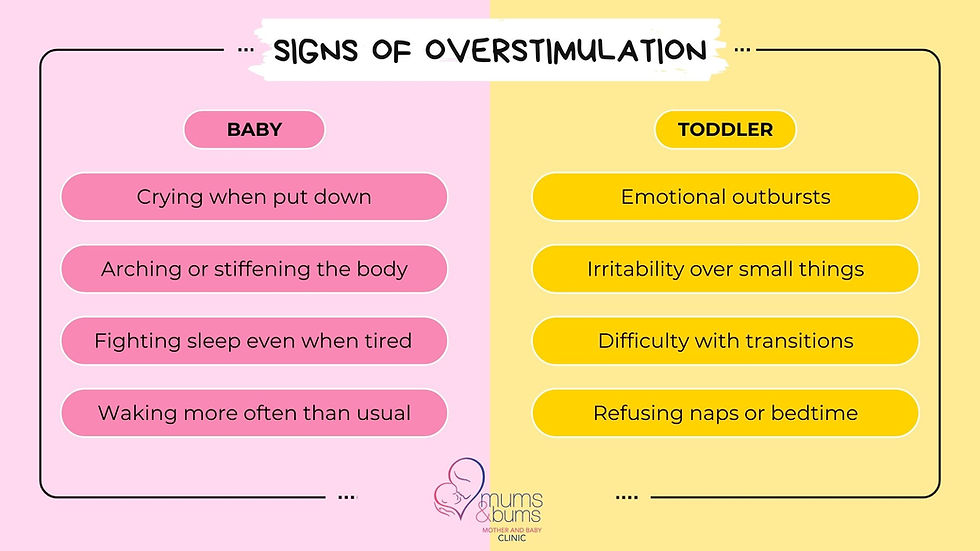
In babies, overstimulation often looks like:
Crying when put down
Arching or stiffening the body
Fighting sleep even when clearly tired
Waking more often than usual
In toddlers and young children, overstimulation may look like:
Emotional outbursts or meltdowns
Irritability or frustration over small things
Difficulty with transitions
Refusing naps or bedtime
These behaviours are physical signs that the nervous system has received more input than it can comfortably process and needs fewer stimuli and more calm to reset.
Why Babies and Children Become Clingy After Holidays
Clinginess often increases after busy periods, and this is a normal emotional and developmental response in babies and young children.
Young children rely on their primary caregivers as a secure base. During the holidays, they are exposed to many new people, places, routines, and sensory experiences. While these experiences may be positive, they still require emotional and neurological processing.
Once the stimulation slows down, they often seek reassurance to reestablish a feeling of security. This is not manipulation or habit-forming. It is part of healthy attachment and emotional regulation. Responding with comfort helps regulate stress responses, allowing children to feel secure enough to explore and settle again. In the long term, consistent reassurance supports emotional resilience rather than dependence.
Why Naps and Bedtime Fall Apart After The Holidays
If you are wondering why your baby will not nap after Christmas, or why bedtime suddenly feels harder, overtiredness is often a major part of the picture.
During the holidays, later bedtimes, irregular sleep schedules, and missed naps are common. Babies and young children rely on consistent sleep timing to build up appropriate sleep pressure. When this pattern is disrupted, they can become overtired. In an overtired state, the body releases stress hormones such as cortisol. These hormones increase alertness and make it harder for the brain to transition into sleep.
This can lead to:
Shorter or skipped naps
Resisting sleep at bedtime
More frequent night waking
Increased evening fussiness
This cycle can feel exhausting for families, but it is usually temporary. Once sleep times become more predictable again, sleep patterns typically improve without the need for major interventions.
💤 If your baby or child’s sleeping problems feel like more than just post-holiday overstimulation, it could be a sign of a sleep regression. If you’d like to learn more about sleep regressions, have a look at our blog post: Sleep Regressions: Why Your Baby Suddenly Won’t Sleep.
How Long Does It Take Babies and Children to Settle After Holidays?
For most babies and young children, things begin to improve within a few days to a week once familiar routines return.
Some children take a little longer to settle, particularly if the holiday period included travel, illness, or significant disruption to sleep. This variation is still within the range of normal and does not indicate a lasting problem.
Consistency is far more helpful than strict schedules during this time. Repetition of familiar routines allows babies and children to settle without added pressure.
If you’re still planning travel these holidays, here are some great tips and tricks for hitting the road with babies and children.
What Helps Babies and Children Settle After the Holidays
You don’t need to overhaul your routine or introduce strict rules to help your baby or child settle. In fact, sudden changes or rigid schedules can add more stress to an already overloaded system. Simple changes are far more effective.
Here are some things that may help:
Returning to familiar sleep and wake times
Regular timing helps reset the body’s internal clock. Even small shifts back toward normal sleep patterns support better sleep pressure and hormone regulation.
Keeping one calming anchor routine, such as bedtime
A predictable sequence of quiet activities, such as a bath, feed, story, or cuddles, sends a strong signal to the nervous system that it is time to wind down.
Offering quieter days at home where possible
Reducing outings and stimulation for a few days allows the nervous system to recover from sensory overload. Calm, familiar environments are particularly helpful during this reset period.
Allowing slightly earlier bedtimes for a few days
Earlier nights can help mitigate overtiredness without requiring additional naps. This often improves sleep quality rather than causing early waking.
Offering comfort freely and without guilt
Physical closeness, reassurance, and responsiveness help lower stress hormones and support emotional regulation. Comfort is a regulatory tool, not a habit that needs to be managed.
Think of this period as recovery time rather than something that needs fixing. With a little predictability and patience, most babies and children settle naturally as their systems rebalance.

When Fussiness Is Not Just the Holidays
While post-holiday fussiness is usually part of normal adjustment, there are times when it is worth checking in with a healthcare provider.
Fussiness caused by routine disruption or overstimulation should gradually improve as predictability returns. If symptoms are escalating, persistent, or accompanied by physical signs of illness, it is important to seek medical advice.
Seek medical care if your baby or child has:
Fever, especially in babies under three months, or a fever that does not settle.
Poor feeding or drinking, including fewer wet nappies or signs of dehydration.
Repeated vomiting or diarrhoea, which can quickly affect fluid balance in young children.
Unusual sleepiness, low energy, or difficulty waking, beyond normal tiredness.
Crying that is intense, persistent, or inconsolable, particularly if it sounds different from usual crying.
These signs suggest that something beyond routine disruption may be at play and should be assessed.
💊 If something feels different from your child’s usual behaviour, book a baby and child wellness check at Mums & Bums. You know your child best, and it is always okay to ask for guidance when you are unsure.
A Reminder for Tired Parents
If your baby or child is fussy after the holidays, it does not mean you have undone months of routine or caused lasting problems. It means their little system is adjusting after a busy season.
With time and a bit of extra comfort, most families see things settle sooner than they expect. And if you are feeling exhausted too, that makes sense. This season is a lot for everyone.
If you need a check-in, contact Mums & Bums for a child wellness consultation. We’re always here to answer questions and reassure you.

Frequently Asked Questions: Babies and Children After the Holidays
Is it normal for babies to be fussy after the holidays?
Yes. It is very common for babies to be fussy after the holidays. Changes in routine, sleep, feeding times, and increased stimulation can overwhelm a developing nervous system. This often leads to fussiness, clinginess, and difficulty settling, which usually improve once routines return.
Why is my baby crying more after Christmas?
Babies often cry more after Christmas due to overstimulation and disrupted sleep patterns. Busy environments, late nights, and being handled by many people can place stress on the nervous system. Once the excitement ends, babies may cry more as their bodies try to regulate again.
Can holidays disrupt a baby’s routine?
Yes. Holidays frequently disrupt baby routines by shifting bedtimes, naps, feeding schedules, and daily rhythms. Babies rely on consistency to feel calm, so even short disruptions can affect sleep and behaviour for several days afterward.
Why is my baby suddenly clingy after the holidays?
Clinginess after the holidays is a normal response. Babies and young children seek reassurance from their caregivers when their environment feels unpredictable. Increased closeness helps them feel safe and supports emotional regulation during adjustment periods.
Can overstimulation make babies cry more at night?
Yes. Overstimulation can increase stress hormones, making it harder for babies to fall and stay asleep. This often results in increased evening fussiness, frequent waking, or shorter sleep periods until stimulation levels reduce and routines stabilise.
Why won’t my baby nap after the holidays?
Babies may struggle to nap after the holidays due to overtiredness. Later bedtimes and missed naps can disrupt natural sleep cues. When babies become overtired, their bodies remain in a heightened alert state, which makes settling more difficult even when they are exhausted.
Is post-holiday fussiness a sleep regression?
No. Post-holiday fussiness is usually not a sleep regression. It is more commonly caused by routine disruption and overstimulation. Sleep typically improves once familiar schedules and calming routines are reestablished.
How long does it take for babies to settle after the holidays?
Most babies and young children begin to settle within a few days to a week after routines return. Some may take longer, especially if there was travel or a significant sleep disruption. This variation is still normal.
How can I help my baby settle after the holidays?
Helping your baby settle after the holidays involves returning to familiar routines, offering calm days at home, maintaining consistent sleep and feeding times, and providing comfort as needed. Gentle consistency is more effective than strict schedules during this period.
When should I worry about fussiness after the holidays?
You should seek medical advice if fussiness is accompanied by fever, poor feeding, repeated vomiting or diarrhoea, unusual lethargy, or persistent inconsolable crying. These signs may indicate illness rather than routine disruption.
Is it okay to comfort my baby more during this time?
Yes. Comforting your baby does not create dependency. Physical closeness and reassurance help regulate stress responses and support emotional development, especially during periods of adjustment.



kèo bóng đá mình thấy nhiều người nhắc nên cũng ghé thử cho biết, chủ yếu xem giao diện chứ không có ngồi nghiên cứu gì sâu. Lướt vài cái là thấy trang làm kiểu khá “sạch”, khoảng trắng vừa đủ nên nhìn không bị rối mắt. Mình thích nhất là mấy khung thông tin họ trình bày dạng bảng cột, nhìn phát là bắt được ý chính, đỡ phải đọc dài dòng. Thanh menu để ngay chỗ dễ thấy nên chuyển qua lại mấy mục nhanh, không phải mò hay bấm nhiều lần. Kéo xuống cũng mượt, các phần được ngăn bằng tiêu đề rõ ràng nên cảm giác theo dõi dễ hơn hẳn, nhất là đoạn bảng kèo…