
Baby Vaccines in South Africa: When, What, and What to Expect (Simple Parent Guide)


Maybe your baby’s six-week vaccine visit is coming up, and instead of feeling prepared, you’re sitting with more questions than answers.
The truth is, most of the anxiety around baby vaccines comes from not knowing what to expect. Which vaccines? How many at once? What if my baby cries for hours afterwards? What if we miss an appointment? These are real questions that parents ask every single day.
So let's keep it simple. This is the all-you-need-to-know guide to baby vaccines in South Africa, written by a registered nurse and mama who's helped thousands of families through exactly this.
When do Babies get Vaccines in South Africa?
Vaccines in South Africa start at birth and follow a carefully planned schedule through the first few years of life. Each visit is timed to give your baby the best protection at exactly the right moment.
Here is the basic timeline:
|
|
This schedule is designed to protect your baby when they are most vulnerable.
Baby Vaccine Schedule South Africa (Simple Guide)
South Africa follows the Expanded Programme on Immunisation, or EPI.
The schedule is carefully designed around two things:
When a baby's immune system is mature enough to respond to a vaccine.
When the risk of catching a particular disease is highest.
That balance is why you cannot shift visits around without potentially leaving your baby unprotected during a vulnerable window.
Your baby can get their vaccines at either a government clinic or a private clinic. Where private clinics differ is in the additional vaccines available outside the EPI. These are not included in the public schedule, usually because of cost rather than any question of their safety or effectiveness.
For a full breakdown of the South African baby vaccine schedule, see our guide here. It explains when babies get vaccines and what each one protects them against.
What Vaccines do Babies get in South Africa?
The vaccines on the South African schedule are not random. Each one was chosen because the disease it prevents is either common enough, serious enough, or dangerous enough in young babies to justify early protection. Here is a quick look at what your baby is being protected against at each appointment:
At birth
BCG protects against tuberculosis, and polio drops protect against the poliovirus. Both are given early because TB is still a real risk in South Africa, and protection is most important right from the start.
At 6, 10, and 14 weeks
These are the busiest visits. Your baby is protected against infections like whooping cough, pneumonia, diarrhoea, hepatitis B, polio, and more. It sounds like a lot, and that’s a very common concern, which we’ll come back to shortly.
At 6 months
This visit adds protection against measles and rubella, viruses that spread easily and can cause serious illness in young children.
At 9 months
A pneumococcal booster strengthens protection against serious infections like meningitis and pneumonia. Some babies may also receive additional protection against meningococcal disease, depending on their vaccine plan.
At 12 months
The MMR vaccine protects against measles, mumps, and rubella in a single injection. Hepatitis A is also introduced, protecting against a liver infection spread through contaminated food and water.
If you have any concerns about vaccines, we discuss the most common questions in our vaccine safety and myths guide.
At 15 months
Protection is expanded to include meningococcal disease and chickenpox. While chickenpox is often thought of as mild, it can lead to more serious complications in young children.
At 18 months
A booster dose strengthens protection against several earlier infections, including whooping cough, tetanus, hepatitis B, and polio. A second hepatitis A dose is also given to complete that series.
At 6 years
School entry is a good time to boost protection again. This includes vaccines for measles, mumps, rubella, chickenpox, and a booster for whooping cough, tetanus, and polio.
Between 9 and 14 years
The HPV vaccine protects against the types of human papillomavirus linked to cervical cancer and other cancers. It works best when given before exposure, which is why it’s offered at this age.
At 12 years
A booster is given to maintain strong protection into adolescence, especially against whooping cough, which can still circulate in schools and communities.

Are Baby Vaccines Safe?
Yes, they are. That is the short answer, and it’s an honest one.
Every vaccine on the South African schedule has been tested extensively. The approval process is long, rigorous, and internationally standardised, and these vaccines have been used safely in millions of children worldwide.
Many parents feel hesitant. Nobody enjoys watching their baby get an injection. But the known risks of vaccines are very small. The risks of the diseases they prevent are very real, especially in young babies.
You might have seen information online that’s left you feeling uneasy. We unpack common vaccine myths and safety concerns in more detail here.
What to Expect After Baby Vaccines (Side Effects Explained)
Some babies sail through vaccine visits. Others have a rough day or two. Both are normal. The most common things you might see after vaccines include:
A low-grade fever, usually within 24 hours
Fussiness or crying more than usual
Sleepiness, more than usual
Redness, swelling, or a small lump at the injection site
These are signs that your baby's immune system is responding. In most cases, a little extra comfort, a feed, and some rest are all that is needed. Serious reactions to vaccines are very rare, but if you are ever concerned about how your baby is responding, trust your gut and call your clinic or doctor.
For more details on what to watch for at each age, see our full side effects guide here.
What if my Baby Misses a Vaccine?
First, do not panic. You won’t need to start from scratch.
Missed vaccines can be caught up on. Your baby does not lose all their protection if one appointment is late. The important thing is simply to get back on track.
The timing can be adjusted safely based on your baby’s age, and the plan is built around where your baby is now, not where they “should” have been.
If your baby is behind on vaccines, you can follow our catch-up vaccine schedule to see exactly what to do next.
Baby Vaccination Prices in South Africa
Vaccine costs can vary depending on where you go and which vaccines your baby needs during the visit.
Public clinics
Vaccines on the standard South African schedule are available through government clinics. You will need your baby’s Road to Health booklet at each visit.
Private clinics
Private clinics charge for both the consultation and the vaccines given at that visit. Costs vary depending on the combination of vaccines, and many medical aids cover routine childhood vaccines as part of their benefits.
Additional (private) vaccines
Some vaccines are only available in the private setting, including protection against chickenpox, meningococcal disease, and hepatitis A. These can offer added protection depending on your baby’s needs and your family’s preferences.
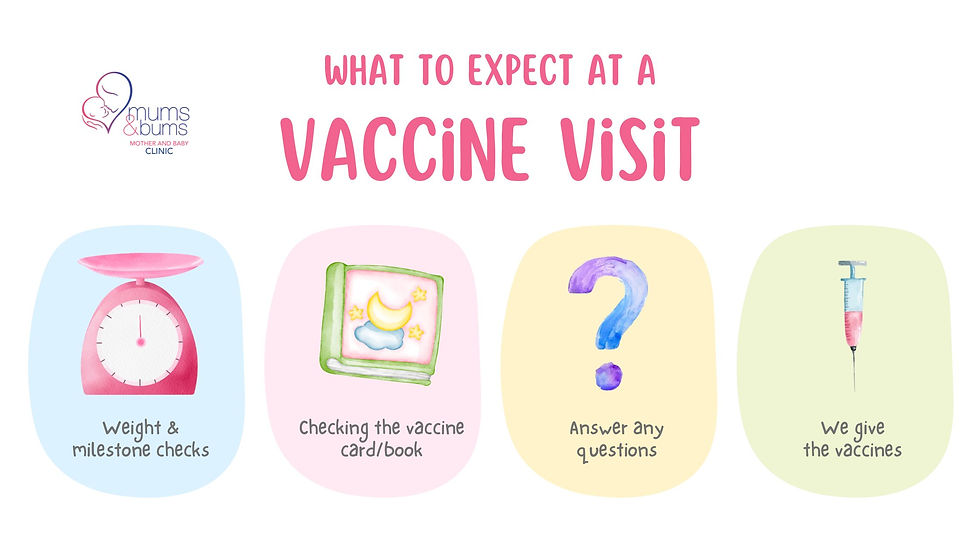
What Happens at a Baby Vaccination Appointment?
Here’s what a typical vaccine visit looks like:
We check your baby’s weight and general health before giving any vaccines
We go through your baby’s vaccine card/book and confirm what is due
We answer any questions you may have before we start
We give the vaccines as quickly and gently as possible
Most appointments are easier than parents think.
Ready to bring your baby in? You can book your baby’s vaccine appointment online here.
When Should I Book my Baby's Vaccines?
As close to each milestone as possible, vaccines work best when given on time, so try not to delay too long after each scheduled visit.
If you’re not sure where your baby is on the schedule, bring your Road to Health booklet, and we can check exactly what’s due and plan from there.
Baby Vaccines in South Africa: Common Questions Parents Ask
At what age do babies start vaccines in South Africa?
Vaccines start from birth. BCG and oral polio (if available) are usually given in the first few days of life, followed by the six-week visit.
When do babies get vaccines in South Africa?
Vaccines are given at specific milestones, including birth, 6 weeks, 10 weeks, 14 weeks, and beyond, following the South African vaccine schedule.
👉 You can see the full timeline in our South African baby vaccine schedule.
Can I delay baby vaccines in South Africa?
Delaying vaccines is not recommended. The schedule is designed to protect babies when they are most at risk. If your baby has already missed vaccines, they can catch up.
👉 See our catch-up vaccine schedule for what to do next.
What happens if my baby misses vaccines?
Missing a vaccine does not mean starting over. A catch-up plan can be created based on your baby’s current age.
👉 Read our catch-up vaccine schedule to see how this works.
Can babies get too many vaccines at once?
No. Babies can safely receive multiple vaccines during a single visit. Their immune systems are designed to handle this, allowing protection to build as early as possible.
👉 We explain this further in our common vaccine myths and safety concerns guide.
How many vaccines does a baby get at once?
At the 6-week, 10-week, and 14-week visits, babies usually receive a few injections along with oral drops. Each vaccine protects against different diseases. Most babies tolerate this well, even if it feels like a lot in the moment.
Are baby vaccines safe?
Yes. Vaccines used in South Africa are carefully tested and widely used, with strong safety records.
👉 If you have concerns, we unpack common vaccine myths and safety concerns in more detail.
Can my baby get vaccines if they are sick?
It depends on how unwell they are. A mild cold is usually fine, but a baby with a high fever or more serious illness should wait until they have recovered.
If you are unsure, it is always best to check before your appointment.
Which vaccines are compulsory in South Africa?
Vaccines are not legally enforced in South Africa, but the national schedule is strongly recommended. Some schools or childcare facilities may have their own requirements.
Are private vaccines necessary in South Africa?
The public schedule covers the most important vaccines. Private vaccines offer additional protection and are often recommended if you’d like more comprehensive coverage for your baby.
If you are in Centurion or the surrounding area and looking for a clinic where you will feel supported rather than rushed, we would love to look after your family. We are a registered nursing clinic specialising in baby and maternal health, and we take your questions seriously.
Book online here or reach out via WhatsApp. We are here when you need us.




Comments